Sunday, February 28, 2010

Too Soon for US Enterprise


President Obama pronounced the Constellation Program dead when he released his proposal for the 2010 federal budget (Nature)*. Funding for Constellation, NASA's plan to reunite man and the moon in 2020, has been pulled entirely. Instead, the money is now allocated for incentives for commercial space companies to develop cheaper launch programs for humans and cargo to reach orbit. Placing faith in commercial space corporations will run up costs, will create ethical issues, and will bring about difficult legal considerations in the long run. The space race is not over, and this decision could take us out of the lead.

To date, $9 billion have been spent on NASA’s Constellation project, which was supposed to develop an updated rocket system (Wikipedia.org) capable of carrying cargo and astronauts into space. The project was meant to replace the aging space shuttle that costs more to send into space every time it is launched. Constellation is effectively canceled though because instead of receiving the prescribed increase in funding, NASA is being allotted a billion dollars less this year. The money that was previously tagged for NASA has been reallocated as incentives, approximately $6 billion over the next five years, for commercial space companies to develop cheaper rockets with load-bearing capabilities. The government is picking the pocket of its personal team of rocket scientists and giving it to a bunch of businessmen in hopes that they can conjure a method of saving money. It is unknown whether or not a market for space flight even exists beyond NASA. In addition to the $9 Billion that has basically been wasted already, use of the International Space Station (Nature, Eric Hand)* that was supposed to end in 2016 will be extended to 2020, which will devour even more funding in the future. As if that wasn't enough of an insult, all deep space programs are being indefinitely canceled to free up more of NASA’s budget for Earth monitoring systems, such as a satellite that measures atmospheric carbon dioxide levels. Global warming strikes again.

You are a menace.

Assuming commercial space companies are successful in producing cheaper, cargo-bearing rockets that are capable of orbital flight, the next steps are virtually unknown and unpredictable. These businesses will take what the government has given them and run into outer space as if it were the next gold rush. The idea of commercializing space is curtailed by a growing number of ethical concerns. To begin with, whose ethical standards even apply in space? The American government’s? Religious leaders’? The Federation from Star Trek’s? It is hard enough to think of determining an ethical code between different countries, let alone separate businesses. Next we will need to decide whether free enterprise should be allowed in space. The reigning economic system in the world may not be the most suited for outer space. Will countries and companies seek to claim different orbits? If facilities are established on the moon, will that land be the property of that company or nation? Manifest destiny was a perfectly feasible idea when people set out to explore the West because there was a limit to how far they could go. Once we set out to conquer the solar system and beyond, where do we stop? The point here is that privatizing space presents far more questions than answers (David M. Livingston), and in this day and age, questions have to be answered with law.

Current international space law is, in a word, inadequate, especially when you consider the fact that space travel may now be sponsored by a business instead of a government. Existing Space treaties (Sarah Coffey, 6)* employ vague phrases such as “free for exploration and use by all states” and that “the exploration and use of outer space … shall be the province of all mankind” to try and establish order in orbit. These treaties were written during the Cold War to prevent space from becoming another battlefield, and they were not widely ratified. Furthermore, it is obvious just by looking at the language that they do not account for separate companies entering into the usage of space, only separate countries. Once again, more problems arise than solutions. The issue of space law is not entirely without similar precedent. Sarah Coffey likens the situation to maritime law and to laws governing Antarctica (10)*. These are areas of the world that were uncharted for long periods of history and that were lacking in adequate legal oversight. Governments have since negotiated effective treaties that keep these regions from being lawless. If similar laws are written to govern space with individual corporations in mind, then maybe the fever will pass and businesses will not simply run wild in the final frontier.

By denying NASA the funds it needs to continue its space program, the president is creating a powder keg of issues that will be ignited by the volatile practices of commercial businesses. He is taking money out of the hands of people that we have trusted it with since they took us to the moon the first time forty years ago and instead giving it to people that can only give us projections and rough estimates of their capabilities to even accomplish the mission. NASA has done it before. They have the game plan written up already. Why then are we letting someone else reinvent the wheel to run ourselves over with it? The only way to salvage the situation will be to make sure adequate regulations are in place before stellar syndicates are established. Otherwise, this decision makes very little sense.

About as much sense as this picture.

*Subscriptions necessary to view.

Friday, February 26, 2010

A Decade for those who may only have A Decade Left


For those who knew Abraham Lincoln well, it came as no surprise to find him weeping in private or reciting maudlin poetry to express his many melancholies. Nowadays, we accept the theory that our sixteenth president suffered Major Depressive episodes. Though despite his unwavering personal woes, honest Abe persevered and led our nation through what was perhaps the most trying time in our history. But it wasn’t the civil discord that made him blue—blue as in sad, not blue as in the colors of the Union—it was the fate of his dear children, who died at early ages due to physical illnesses such as tuberculosis and typhoid fever. I present this instance for two reasons. One, to prove that those with depression can still do great things, and two, to point out that Lincoln’s depression primarily stemmed from his children’s uncontrollable deaths. Bearing this in mind, I’d be willing to bet that if Lincoln was in control of allocating medical research funds, he’d give less toward understanding psychiatric disorders such as depression, and more toward understanding the deadly diseases that claimed the lives of his children.


Yes, psychiatric disorders are hard to live with. Yes, learning to prevent them will make the world a better place, not only for the afflicted individuals, but for the individuals’ families and friends. On these facts, I agree with the article from I read from Nature entitled “A Decade for Psychiatric Disorders.” But then the author of the article makes a call to action. He argues that psychiatric disorders deserve a bigger slice of the research funds and that this coming decade is the time to focus more on curing and understanding these mental illnesses. This would be nice, I thought, but is it practical? In light of the millions dying from more-immediate afflictions such as heart disease, Cancer, AIDS, Malaria, and countless other conditions (not to mention tuberculosis and typhoid fever in their day), I am not convinced that now is the time. Yes, snapping a girl’s daddy out of depression would make the world a better place, but I argue that removing Cancer cells from his prostate and saving his life would be even better.


To make-concrete his claim that health-related research is unjustly disproportional, the author manipulates his reader’s sense of logic by drawing a comparison. In Britain, he states, the public donates a staggering £500 million (US$800 million) every year to charities for cancer research alone, but for mental-health research the figure is just a very few million. This would be an affective point, were it not for the fact that the money was publically donated. I believe that the collective concerns of the people should represent the collective aims of our research. Simply put, in our struggling global economy, we have to prioritize. As Newton put it, for every action there is an equal but opposite reaction. Similarly, if we distribute more funds towards researching psychiatric disorders, we would consequently have to pull funds from researching the most serious, life-threatening, and widespread ailments on Earth.


In fact, my psychology book from last semester makes a case that psychiatric disorders (such as depression) may primarily be environmental. It describes growing trends over the years, and suggests that as the world becomes more media-driven and materialistic rates of depression have steadily increased. If this is the case, then the sickness is based within the sufferer’s subjective view of the world. Theoretically, he could suck it up, exercise free will, and change his circumstances. He could quit feeling sorry for himself and adopt a more cheerful view of the world. But easier said than done, right?


I did a little research of my own, and found an article from the Journal of Cognitive Psychotherapy entitled “Self-Administered Optimism Training: Mechanisms of Change in a Minimally Supervised Psychoeducational Intervention.” The article asserts right off the bad that a “Pessimistic explanatory style is a robust predictor of future depressive symptoms.” It then details an experiment in which 112 college students with a pessimistic explanatory style identified from a larger screening sample were randomly assigned to either Self-Administered Optimism Training or a no-treatment control group. The students who practiced optimism demonstrated a significant drop in pessimism in three separate but related assessments. The article concludes by suggesting that although the tests were preliminary in nature, the findings “demonstrate the feasibility and preliminary efficacy of an inexpensive, prophylactic treatment for depression that utilizes a minimum of therapist contact.” Easier said than done, right? Perhaps so, but it might be easier than people think.


By including this research, I am trying to make several points. One is that there is research being done, and it appears to be doing just fine. The next is that based on this study, improvements can be made by simple methods of self-motivation and a willingness to change, not dishing out millions. And finally, non-psychiatric disorders such as cancer are primarily genetic, not environmental, and cannot be cured simply by administering short sessions of optimism training. Cancer patients possess less control over their fate, and the research needed to understand and ultimately cure the condition is, by nature, more expensive.


I found additional evidence to suggest that depression lies primarily in the eye of the beholder in an article from Science entitled “Can Placebo Be the Cure?” You see, drug companies had eagerly been anticipating a highly-touted product to ward off depression, but when the company sat down and analyzed the data from the clinical trial, it found that patients who had received the dummy pill had done unexpectedly well. Those on the placebo did almost as well, in fact, as those on the actual drug, thereby wiping out the rationale for the new antidepressant. These results offer further proof that depression may not be as hopeless and harmful as is often thought. Neither optimism training, nor a placebo cost very much, so why restrict funding for deadly diseases and give more to those with psychiatric issues? After all, there is no placebo for Cancer.


And maybe I am going a little overboard here, but perhaps if there were less terminally ill people in the world, those prone to depression would have less to be depressed about; sort of a two-birds-with-one-stone type scenario. It’s easy to be passionate about a cause, as I believe the author of the article from Nature is, but it is harder to be logical in considering the consequences. In this case, allocating more funds towards research on psychiatric disorders would remove funding from research being done on deadly diseases. The title of the author’s article is “A Decade for Psychiatric Disorders.” I say, how about a decade for those that may only have a decade, or less, left?

Thursday, February 25, 2010

Animal Testing: Science or Torture?


Allergan researchers frequently commit murder by Botox. In a test known as 'lethal dose 50', researchers kill mice in high numbers (the exact number is not known because laboratories do not count individual mice) to assess potential harm to humans from Botox injections. Mice receive injections until a dose is found that 'only' causes half the population to die. Why do these innocent mice have to die? So that later some vain person can try to defy wrinkles and old age? Animals used in scientific research experience horrific pain, abuse, or even death, when forced to endure various testing methods like 'lethal dose 50'. For this reason, scientific researchers should abandon inhumane, costly, and inefficient animal testing processes, and instead favor alternative methods.

Truly understanding animal testing requires knowing some background information. Numerous laboratories all over the country use animal testing methods. Personal care and household products makers, colleges and universities, drug and chemical manufacturers, and state and federal regulatory agencies own and operate these torture facilities, er, i mean laboratories. These labs usually acquire the animals by two ways, either through USDA licensed Class A or Class B dealers. Class A dealers sell "purpose-bred" animals. This means the sole purpose for the animals' life is experimentation. Afterwards, they face termination. Class B dealers supply “random source” animals. Class B dealers obtain these animals through auctions, “adopting” them from shelters, or even stealing them from backyards while their unsuspecting owners aren’t home. Class B dealers sell animals to researchers by word of mouth, or even publications like Lab Animal magazine. Seriously. A whole magazine is dedicated to this. After the animals reach the labs, researchers subject them to various experiments. Animals are cloned, bred for organs, addicted to drugs and alcohol, purposely deafened or blinded, made to suffer strokes, and many other horrible abuses. Who funds this glorified animal abuse? Funding can come from private individuals and foundations, donations solicited from the public, industry money, and the biggest contributor: the federal government.

Now that you know the back story you probably already recognize the inhumanity of animal experiments. However, many problems associated with animal testing most people don’t even consider. For one thing, animal testing methods are outdated. Some tests used today are as much as eighty years old. Despite their age, these tests were never formally validated in multiple labs. So basically, scientists keep using these tests, even though there is no precedent that says they actually work. Actually, results from animal testing do not necessarily predict similar results in humans. Scientific evidence shows that even the most common animal tests poorly indicate human effects. For example, in two hundred and eighty one cases of accidental human exposure to household products, investigators with the US Food and Drug administration discovered that rabbit test results predicted human responses correctly less than half of the time. This means that for more than fifty percent of the time, rabbit test results were not similar to that of human results. Excuse me if I'm wrong, but that's not exactly trustworthy research, is it?

Other options do exist. Alternatives to animal testing cost less, and have more efficient outcomes. Just one example is testing non-genotoxic cancer risks. The animal test assessing cancer risks cost $700, 000. The in-vitro test cost $22,000. I may not be a rocket scientist, but even I know that the animal test costs almost 35 times more than the in-vitro test. Also, since most toxicity tests were first put to use long ago, a number of advances in biology and biotechnology have occured. Advances include those in tissue engineering and robotics, which have introduced the ability for in vitro testing. Computer-based engineering technologies include in silico testing. One example of an alternative method available for use involves human skin, leftover from surgeries or donated cadavers, which can be used to measure the rate at which a chemical will penetrate the skin. This option is not detrimental to animals, or living humans. This is just an example of one alternative that could generate more relevant data, and reduce the amount of time, money, and animals involved in scientific testing.

Luckily, someone out there noticed the numerous disadvantages of experimenting on animals. After recognizing the need for alternatives to animal testing, the cosmetics industry now experiments with different methods. Previously, a ‘rabbit Draize test’ was used to evaluate eye irritation of cosmetic ingredients. Research by the industry, as reported in the article "A tiered approach to the use of alternatives to animal testing", led to the development of several alternatives. Bonus! These alternatives were approved via formal validation. So far, no single in vitro alternative has completely replaced the rabbit Draize eye test, but the cosmetics industry is working on it, as they have done for the past decade. These alternatives provide valuable evidence that animal testing is not the only option for assessing the safety of ingredients and finished products. The cosmetics industry demonstrates a prime example of how some manufacturers are working to introduce alternative testing methods. So, here's some advice for those aforementioned Botox users: get some wrinkle-cream.

Ultimately, the fact that animal testing is costly and often produces wrong results is reason enough to use other methods in scientific research. Technological advances will surely keep introducing newer and better alternative testing methods. The cosmetics industry is one example of how it is possible to use alternative methods to correctly predict products’ safety. The only obstacle now is to clear animal testing completely out of laboratories. Many people show their support for non-animal testing by only buying products that are cruelty-free, or giving only to charities that do not experiment on animals. Hopefully, reading this has made you aware of the inhumanity of experimenting on animals, if you weren't before. Perhaps the animal lover in you will choose a career path that will allow you to research alternative methods, or maybe you will lobby for animal rights. Or, maybe you’ll just look at the label before you buy your next household product, just to make sure it wasn’t tested on a defenseless animal.

Friday, February 12, 2010

Hope for the Hawksbills


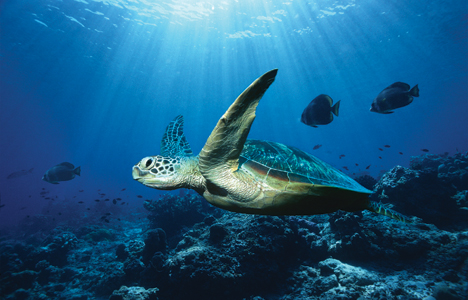
The Tasmanian Tiger, the Passenger Pigeon, the Caribbean Monk Seal. What do these three animals have in common? They have all become extinct within the past one hundred years. The list doesn’t end there though. Many species have lost the battle with extinction, and many more are currently listed as endangered or critically endangered. You may be wondering what this has to do with you. Well, how would you feel if you were edging closer and closer to extinction every day, and nobody seemed to care? The fact that numerous animals are dying out is very disturbing, especially because human destruction is a direct cause. But, not to fear! Scientists are constantly researching strategies for saving earth’s amazing creatures. For example, the article “Hawksbill sea turtles in sea grass pastures:success in a peripheral habitat” (Bjorndal and Bolten) was recently published in a Marine Biology academic journal. This article contains information concerning a thirty year study on Hawksbill sea turtles, known to scientists as Eretmochelys imbricate. If you’re like me, you’ve never heard of this particular turtle being on the verge of extinction, but they are currently listed as a Critically Endangered species. Lucky for them, this study may unlock the key to keeping them alive.

Normally,Hawksbill sea turtles thrive in coral reef and other hard-bottom habitats. Unfortunately for these turtles, coral reefs are on the decline. A substitute habitat for Hawksbills in the Caribbean is sea grass pastures. Marine biologists conducting the research reported in the article were trying to determine if sea grass pastures would provide an alternative, yet good quality, habitat for Hawksbill sea turtles. Data was collected over a thirty year period in the Southern Bahamas to assess the quality of sea grass habitats for Hawksbills. The marine biologists collected data on many factors including body size, body mass, and isotope analyses of the Hawksbill turtles. They found that the size distribution, residence times, and body condition index for sea grass Hawksbills are actually higher than those of the Hawksbill populations over Caribbean reefs! This means that the Hawksbill population was able to thrive and grow while living in the sea grass pastures.

Following this study, the biologists determined that sea grass habitats can not only support healthy and productive Hawksbill populations, they are actually more beneficial. Based on these results, scientists concluded that conservation efforts shouldn’t be limited to core habitats. One optimistic option for endangered animals is that secondary habitats could supply conditions that are just as good, if not better, for survival. Although this particular area shows strong favor for providing a substitute habitat for Hawksbills, additional studies are needed. Structure and attributes of sea grass pastures vary throughout the Caribbean, and scientists still need to assess other areas to determine if the results would be the same. Despite this disclaimer, the results of this study are very promising. One small step for marine biologists, one giant leap for Hawksbill sea turtles!

Now, you may read this and brush it off. It’s not like a Hawksbill sea turtle is just what you wanted for your birthday. If this is the case, I’m not sure how you sleep at night. On the other hand, maybe you may found this to be inspirational. Those who major in Marine Biology often conduct studies such as this in the field. As a marine biologist, you could choose for your life’s work to be researching and reporting on strategies for saving aquatic endangered species. Just something to keep in mind as you continue on your journey toward picking a major. Even if this article didn’t magically shine the light on what career path is right for you, hopefully it did make you aware of one special endangered animal.

A Situation That'll Have You Crabby...


Do you like seafood? I sure do – crab legs, crab dip. It’s all good. Some of these crabs that I love to dine upon come from the Chesapeake Bay. However, there’s a problem with this, these little things called phytoplankton are threatening to destroy the crab population from which I get my seafood dinners. Simply as microscopic water organisms, phytoplankton aren't much of a threat, but a study by William Reay, published in the Journal of Coastal Research, shows that phytoplankton are amassing in such great concentrations within the York River estuary that they are becoming a danger for the entire ecosystem. This accumulation of phytoplankton is due to several factors.


In order to deal with any problem, there must be research. Beginning his study by taking measurements on the sediment levels within the estuary, Reay’s team determined that most of the sediment in the York River came from agricultural runoff, with some also coming from erosion of the shoreline. Sediment is merely particles of rock, dirt, and sand that have been weathered off of the mainland by water and carried into the estuary. The source of this estuary’s sediment is significant because the source of the sediment determines which nutrients are being introduced into the estuary. With most of the sediment coming from farm runoff, most of the nutrients are as well. Nutrients from farm run off stem largely from chemical fertilizers and manure. Farmers generally use phosphorous and nitrogen based fertilizers to stimulate crop production, so it makes sense that those are the two most prevalent nutrients found within the York River estuary.

After determining the river’s nutrient composition levels, Reay studied their trend overtime, comparing them to phytoplankton levels. As you might have guessed, phytoplankton levels were at their highest when the levels of phosphorus and nitrogen were at their highest. For you math people, they had a high correlation. With more nutrients to thrive on, the growth of the phytoplankton population rapidly increased. This is not a good thing because extreme concentrations of phytoplankton cause a number of issues that lower the overall water quality of the estuary. These microorganisms bring with them large algal blooms that are harmful to the environment. The algae absorb all of the oxygen in the estuary, starving the other inhabitants of the river of oxygen that they depend on. Fish effectively drown because they lack oxygen necessary to breathe. Algae dramatically reduce water clarity and prevent sunlight from reaching vegetation on the riverbed. Without light, those plants die because they are unable to perform photosynthesis. In death, their detritus (dead remains) further contaminates the water, and the food source for shell fish, such as those delicious crabs, disappears. Add to this chain reaction the actual harmful chemicals that Reay’s study detected, such as mercury and various pesticides, and you become fully aware of how threatened this ecosystem has become. Additionally, this study only focuses on one of many estuaries within the Chesapeake Bay. There is a high probability that similar conditions would be found in others too.

Reay’s study does not suggest any solutions to this problem. It simply points out that there is a problem and that a solution must be found before it is too late. However, there is no easy fix. It cannot be illegal for farmers to fertilize their crops, for fertilization is necessary for production, though it’s runoff may be hurting surrounding ecosystems. It certainly is a dilemma. Reay does propose additional studies to be conducted, mostly in regard to how exactly runoff and the flow of nutrients into the river is affected by topography, landscape conditions, and weather. With greater understanding of these mechanisms that Reay has earmarked, perhaps a viable solution to the problem can be developed. But, in the mean time – while an answer is searched for - I don’t know about you, but I’m going to try and get my hands on as many of those crabs just in case (Reay).

Thursday, February 11, 2010

Go With the Flow


We are usually pretty short-sighted about the world that we live in. To many of us, this planet is the ground we stand upon at this very moment. It is the bricks on the sidewalk and the grass spanning the quad. It is the asphalt under our cars, winding from city to city and coast to coast. However, at those coasts the Earth stops being so rigidly defined and transitions into a more fluid, variable state of matter: water. Over seventy percent of the globe is covered with it, which is something we tend to forget in our concrete jungles. Water is everywhere, and even what we do not drink has an enormous impact on the flow of nature.

Beneath the surface of the great, blue expanses that dominate the globe, there is more to consider, ever churning in the weaving underwater currents that lace among the ocean deep. These currents are so numerous and so intricate that their complexity is similar to that of the threaded strings used to make that itchy sweater your grandma gave you when you were a kid; over and under and in different directions. For most of us, it doesn't occur to ask her how she made it, but scientists always have to ask questions.

The team of researchers in this article* (Sutyrin et al.) are looking to get a better grasp of how ocean currents operate. They decided that instead of looking at the big picture all at once, it would perhaps be more insightful to place a metaphorical magnifying glass onto a small, yet puzzling ocean current that had drawn their attention off the coast of Libya. They hoped that by doing this, they could learn about the basic mechanistic behaviors of this specific current and, if successful, apply their understanding of this miniscule example to the much larger diagram of the entire ocean.

To examine the mini-current up close and personal, the team studied the paths of buoys that were caught in the current over a period of five months. After tracking these buoys, running complicated simulations and collecting hordes of data, they eventually came up with a theory, which they explained primarily with a legion of nightmarish mathematical equations, on how to predict the path, duration, and intensity of the current.

According to their conclusion, the current was the result of the massive quantity of swirling water resulting from its contact with the steep continental shelf. Because the oceans are in perpetual flux, the flow of water becomes agitated when suddenly confronted by a steep shoreline. This creates a phenomenon the scientists labeled as a “large mesoscale anti-cyclone,” which Google says is nothing more than a cyclone of a certain size that turns opposite the normal direction (clockwise in the Northern Hemisphere and counterclockwise in the Southern Hemisphere). Using this information, they were finally able to define the mathematical properties at work.

Ultimately, the team was able to extract an applicable law regarding deep-flow feedback from their data. The slope of the incline of the continental shelf is proportional to the basic drift speed of the current, suggesting that as one increases at a constant rate, the other does also. In an ideal world, the results from this study would be able to accurately predict any and all current behavior throughout the whole ocean, but I suspect that countless more studies will be required before such modeling will be possible. The good thing about scientists is that while they ask so many questions, they also do whatever it takes to find answers, and I am confident that they will keep studying buoy numbers until they no all of the secrets of our blue planet.

*Subscription may be necessary to view.

How the Ocean Affects Climate Change


Don’t turn away just yet because of the title! I promise I have something relatively interesting to tell you about. I understand many people are tired of hearing about global warming, but I hate to break it to ya, this junk ain’t just going away. I won’t lecture you too much on what should be done, but I do want to provide you with a little information about it. My info came from this super scientific-y article from Current Biology entitled Impacts of Climate Change on Marine Organisms and Ecosystems. I’ll let you know how to access this scholarly journal at the bottom, but let me warn you its not so fun to read. I’ll do my best to save you the trouble and try to summarize it here.

Believe it or not, life under the sea is much more pertinent to yours than you think. Life forms in the ocean actually make huge contributions to planetary function. They cycle carbon, nitrogen, and other key elements. If those chemistry terms mean nothing to you, essentially it means they keep the atmosphere in check. Bottom line: you don’t want to mess up what these guys are doing. Yet you are! Silly little humans, always messin’ with the world. The oceans are also huge reservoirs for nutrients and gases. Ocean currents redistribute heat around the planet. So basically, oceans make the world go ‘round and keep all the different climates in check and the way they need to be.

Apparently we cause global warming, and global warming is bullying those helpful organisms in the big blue. It increases ocean temperature and acidity levels. These changes definitely aren’t good for the current ecosystems that thrive in the environment they are already adapted to. How would you feel if someone dropped you in a bucket of acid when you are so used to just regular ol’ water? I’ll tell you how: not so good. Ouch. As carbon dioxide levels increase, so do the acidity levels in the ocean. Those fish scales aren’t that thick. As you know, almost everything we do realizes CO2 into the atmosphere. Some other direct consequences of major CO2 emissions are increasing global temperature, construed weather patterns, and rising sea levels along with the acidifying of oceans which I’ve already talked about.

As for temperature, as it increases the oxygen levels decrease. Ocean ecosystems NEED oxygen in order to survive. Actually, almost everything does. I don’t care if you are Superman, you’re gunna need a little O2 every once in awhile. Rising temps also melt those giant glaciers up near Santa, leaving the current coastal communities ruined by an increase in water level. I come from Wilmington, so lord knows I’ve been on enough informative field trips about estuaries and sounds. They are the areas between fresh and salt water and sort of serve as the ocean’s nursery. These environments are quite fragile and any change in sea level could throw the entire ocean out of whack. Scientists project that if carbon emissions are not reduced, the global temperature could rise as much as 5.5 degrees Celsius in the next hundred years. This would cause many species to go extinct, and as I said in the first paragraph, they are vital to cycling all the gases in the atmosphere.

Despite the disappointing options for direct intervention, scientists do have one win on their side. The improvement of scientific ocean models has made it increasingly easier to predict physical changes in the ocean. Knowledge=the power to change and make a difference when it comes to science. Scientists are still working to move beyond prediction to actually stopping degradation of the marine ecosystems. But they can’t do it on their own!

Now comes the obligatory lecture. You may exit out if you please, I understand we’ve all heard it before. I won’t break out the High School Musical and say something cheesy like “we’re all in this together!” (yes, it has been done), but I will say that everyone does need to do something to make a difference. There is a possibility it may be too late to undo these negative effects on the earth’s oceans. These changes in the ocean could have major consequences on the planet and us. As scientists continue to work on strategies for improvement, there are a number of things we can do in our everyday lives. Most of us own at least one environmentally friendly item, either something as small as a reusable Target shopping bag, or as large as a hybrid car. Keep it up! Use ‘em! I could describe all the different options, but you know what to do. Reduce, Reuse, Recycle. So the bottom line of this article is that the oceans could, in fact, be helpful in our climate change plight. All we have to do now is make sure we don’t destroy the oceans before they can make a difference.


To view the actual article, go to this link and then click the PDF option.